Disillusioned with dating apps like Bumble, Hinge, and Tinder, many young men in India and around the world are migrating to live-streaming platforms such as Tango. What begins as curiosity or entertainment often turns into something far more calculated: a high-pressure monetisation system designed to extract as much money as possible from emotionally vulnerable users.
Behind the flashing animations, flirtatious banter, and “exclusive” access lies a sophisticated in-app coin economy engineered to maximise spending.
The Coin Economy: How the System Really Works
Unlike traditional dating apps, live-streaming platforms operate on a virtual currency model. Users cannot pay broadcasters directly. Instead, they must purchase in-app coins—bundled in packages that range from modest sums to premium tiers costing tens of thousands of rupees.
Here’s the psychological trick:
- Coins represent real money.
- ₹10,000 doesn’t feel like ₹10,000 when converted into colourful digital tokens.
- Sending a “gift” feels less like spending cash and more like playing a game.
Once coins are purchased, they are non-refundable. The platform takes a significant commission—often 30% to 50% or more—before the broadcaster receives her share. The more coins spent, the more everyone profits—except the user.
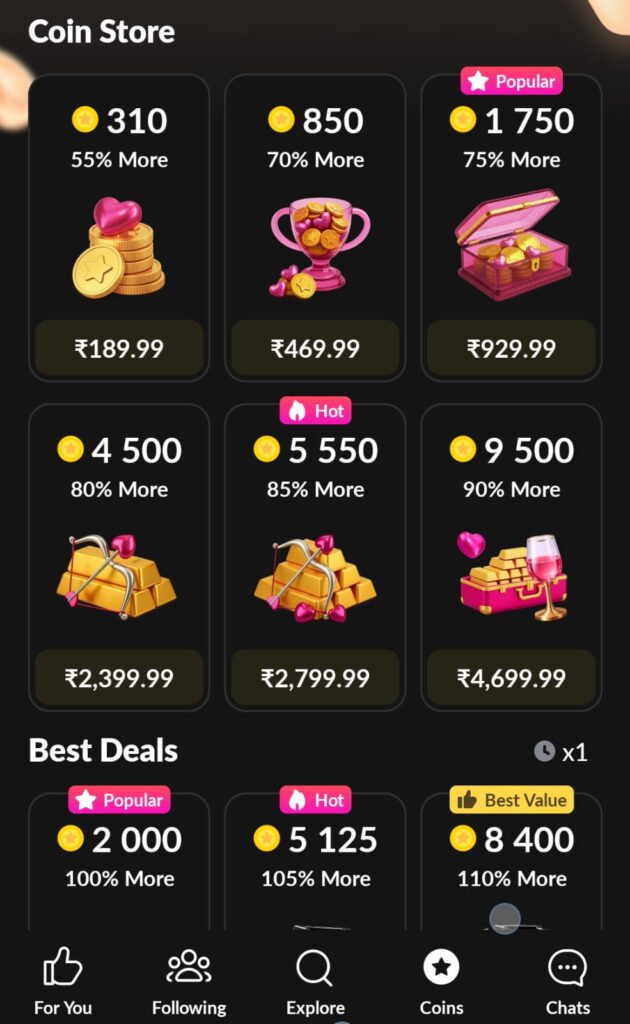
Step 1: The Hook — Manufactured Intimacy
A man discovers an attractive broadcaster, often through social media cross-promotion. He joins her live stream. She smiles, reads his username aloud, and thanks him for a small gift.
That acknowledgement triggers a dopamine rush.
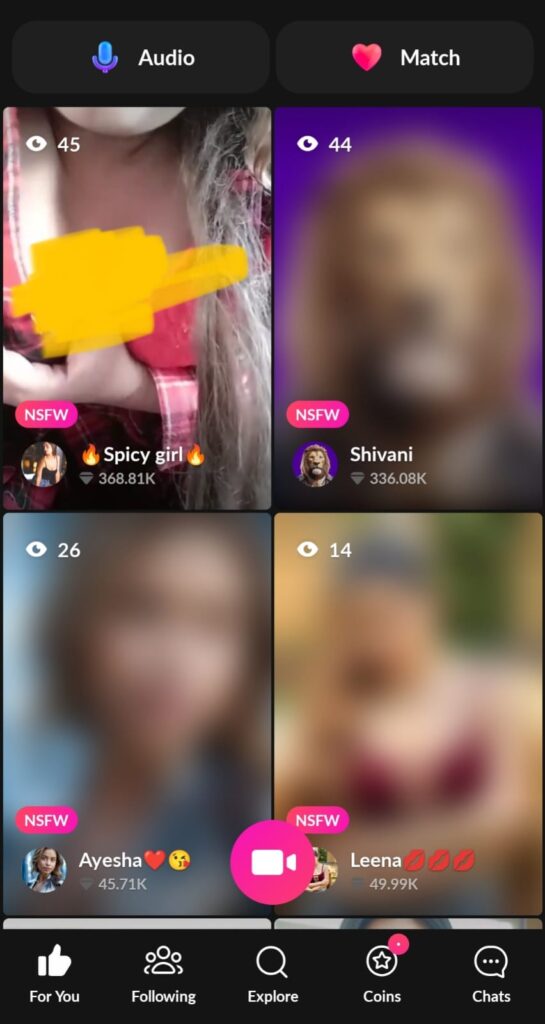
Suddenly, he isn’t just a viewer. He feels seen.
Broadcasters are trained—formally or informally—to create micro-moments of validation:
- “You’re my favourite.”
- “You want a show, baby.”
- “If you send this gift, I’ll call you privately”
It’s not a relationship. It’s performance psychology.
Step 2: Escalation — The Promise Without Commitment
As spending increases, the interaction may move to private chats or subscriber-only streams. Conversations can become suggestive. Hints of exclusive attention are dangled carefully—never explicit promises, never clear commitments.
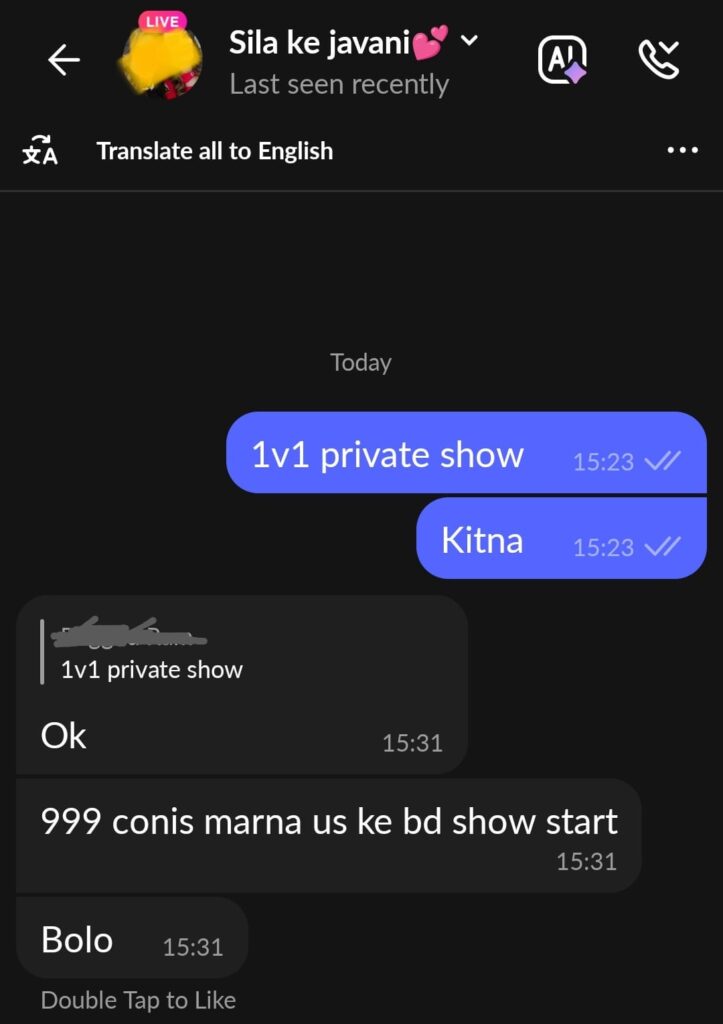
The ambiguity is strategic.
The user fills in the blanks himself. He imagines a possible date. A private video session. Something more intimate.
But the coin meter keeps running.
Step 3: Artificial Competition — The Phantom Gifter Strategy
Suddenly, a “whale” appears.
This user drops gifts worth ₹50,000, ₹1 lakh, sometimes more—in a single session. Animated effects flood the screen. The broadcaster showers him with attention.
The original user feels displaced.
This triggers:
- Scarcity (“I’m losing her attention.”)
- Competition (“I need to outspend him.”)
- Urgency (“If I don’t act now, I’ll lose.”)
Industry insiders and former users frequently allege that some high-spending accounts may not be typical independent users at all. Whether bots, incentivised insiders, or promotional accounts, the effect is the same: they normalise extreme spending and pressure others to match it.
And unlike genuine customers, these accounts appear unconcerned about reciprocation. They don’t demand calls. They don’t seek meetings. They simply spend—and vanish.
Step 4: The Sexual Paywall
A major driver of spending is the implied possibility of adult or intimate performances.
The structure typically looks like this:
- Public stream: Flirtation and teasing.
- Mid-tier gifts: Access to private chat.
- High-tier gifts: “Special show” or subscriber-only content.
But here’s the critical detail: nothing is guaranteed.
Broadcasters operate within platform guidelines. Explicit content may be restricted or carefully moderated. The user assumes escalation will lead to something more revealing or exclusive. Often, it doesn’t.
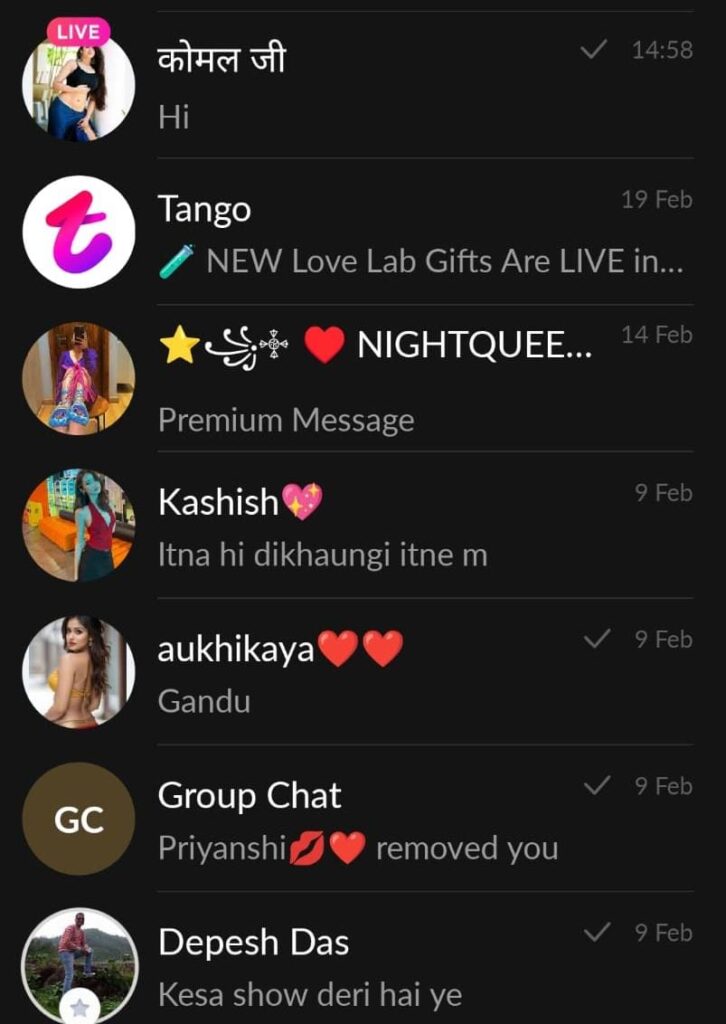
He keeps paying, hoping the next tier unlocks the fantasy.
This is where the coin system becomes most powerful. The gap between expectation and delivery fuels repeated spending.
Step 5: Sunk Cost Trap
By the time realisation sets in, the user may have spent:
- ₹10,000
- ₹20,000
- Even lakhs over months who are addicted to this badly now. At that point, walking away feels like admitting defeat.
So he spends more.
Psychologists call this the sunk cost fallacy—the more you invest, the harder it is to quit, even when the return is nonexistent.
Why This Model Works So Well
Live-streaming platforms are not dating apps. They are entertainment businesses optimised for revenue per user.
Their success relies on:
- Emotional simulation (girlfriend experience without commitment)
- Gamification (leaderboards, rankings, badges)
- Social pressure (visible spending competitions)
- Currency abstraction (coins instead of cash)
- Algorithmic reinforcement (promoting big spenders)
It is a casino model disguised as companionship.
The Reality Check
For every man who believes he is building something real, thousands are competing for the same broadcaster’s attention.
The system is not designed to produce relationships. It is designed to maximise coin purchases.
That does not mean every broadcaster is deceptive. Many are transparent performers earning a livelihood. But the architecture of the platform itself incentivises ambiguity, competition, and emotional escalation.
Real relationships require mutual investment, not leaderboard rankings.
In the end, platforms like Tango are businesses. Their objective is not love, intimacy, or connection.
It is retention.
It is a competition.
It is coin consumption. And in that structure, the house always wins.
I hereby, through the ANA Times medium, request the Ministry of Information and Broadcasting in India, headed by Shri Ashwini Vaishnaw, to look into the regulation of these apps and how they can be made user-secure with no paid nudity.