Donald Trump Confirms Iran’s Supreme Leader Execution in Joint Israeli–US Strikes: What It Means for Iran and Global Stability
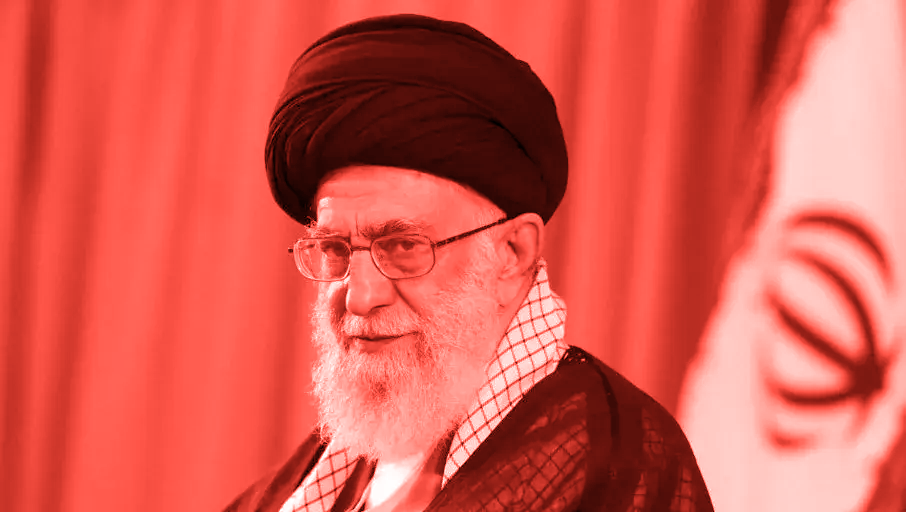
In a development that could reshape the Middle East and global geopolitics, Donald Trump has reportedly confirmed that Iran’s Supreme Leader, Ayatollah Ali Khamenei, was killed during joint military strikes conducted by Israel and the United States. Israeli officials claim they have recovered Khamenei’s body and possess video evidence documenting his death, which they may release publicly.
If verified, this would mark the most consequential leadership loss in Iran since the 1979 Islamic Revolution and could trigger profound political, military, and social consequences both inside Iran and across the region.
The Significance of Khamenei’s Death
Ayatollah Ali Khamenei served as Iran’s Supreme Leader since 1989 and held ultimate authority over Iran’s government, military, judiciary, and foreign policy. His death in a targeted strike would represent not just the elimination of a national leader but a direct blow to the ideological foundation of the Islamic Republic.
EXECUTED
Trump’s reported confirmation suggests a strategic objective beyond military deterrence. It signals a possible attempt to dismantle Iran’s revolutionary governing system. Such an action would represent one of the most aggressive attempts at regime change in modern geopolitical history.
What Could Happen if Iran’s Regime Collapses
The potential fall of Iran’s ruling system would open several possible scenarios.
Democratic transition
One possibility is that reformist movements and civilian opposition groups could attempt to establish a democratic government. Iran has experienced waves of protests in recent years, reflecting widespread dissatisfaction with economic conditions and political repression. However, a successful democratic transition would require institutional stability and unified leadership among opposition forces.
Military consolidation of power
Iran’s Islamic Revolutionary Guard Corps, one of the most powerful military institutions in the country, could assume control. In this scenario, Iran might remain authoritarian but under military leadership rather than religious leadership.
Internal instability or civil conflict
If central authority collapses entirely, Iran could face internal fragmentation, unrest, and prolonged instability. Such conditions could weaken national cohesion and disrupt regional stability for years.
Regional and Global Consequences
The implications extend far beyond Iran’s borders.
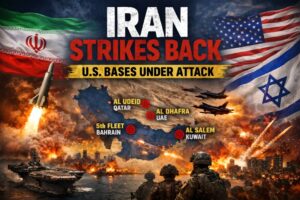
Iran has historically supported allied groups throughout the Middle East. Retaliatory actions by these groups could escalate tensions across multiple countries. Oil markets could face volatility due to fears of supply disruption. Regional security strategies would likely shift significantly, especially for Israel.
Israeli Prime Minister Benjamin Netanyahu has long considered Iran’s leadership a major strategic threat. The removal of Khamenei would represent a significant strategic victory for Israeli security objectives.
Political and Military Implications for the United States
The reported strike has also triggered strong domestic political reactions in the United States.
Senator Jack Reed, chairman of the Senate Armed Services Committee, warned that such actions could have lasting consequences beyond Trump’s presidency. Critics argue that escalating conflict with Iran without congressional authorisation could result in prolonged military engagement and political backlash.
Trump reportedly stated in an interview with Axios that he was prepared for both short-term operations and longer strategic engagement if necessary.
This raises questions about the long-term military, financial, and political costs of such a conflict.
Key Strategic Questions Moving Forward
Several factors will shape the outcome of this situation.
First, whether the strikes have successfully dismantled Iran’s leadership structure beyond Khamenei himself. Iran’s political system is deeply institutionalised, and succession mechanisms exist.
Second, whether Iranian citizens respond with widespread protests or whether the state maintains control through military and security forces.
Third, whether Iran chooses to retaliate directly or indirectly through regional allies or asymmetric warfare.
Fourth, whether the United States and Israel have a clear plan for managing the aftermath of leadership removal.
Lessons From Previous Regime Change Efforts
History shows that removing a leader does not guarantee stability or favourable outcomes. Military operations in Iraq and Afghanistan demonstrated that early tactical success can be followed by prolonged instability and unintended consequences.
Ian Lesser, a senior fellow at the German Marshall Fund, noted that Iran remains a resilient state with deep institutional structures. Even severe leadership losses may not immediately lead to regime collapse.
In some cases, external military intervention can strengthen internal resistance and nationalist sentiment.
Long-Term Risks and Uncertainty
Even if Iran’s current leadership collapses, the path forward remains uncertain. Potential risks include prolonged instability, the emergence of new authoritarian leadership, regional conflict escalation, and increased geopolitical tension between global powers.
The removal of a central figure like Khamenei would mark the end of an era but would not automatically determine what replaces it.