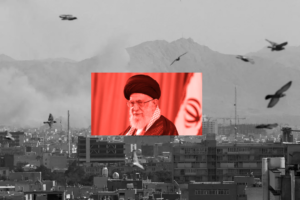
Explosions in Tehran ignited a direct military confrontation
Explosions shook Tehran early this morning and pushed the Gulf into one of its most dangerous escalations in recent years. Before sunrise, the United States and Israel launched coordinated air strikes deep inside Iran’s capital. They targeted military command centres and strategic missile infrastructure in a bold and calculated operation.
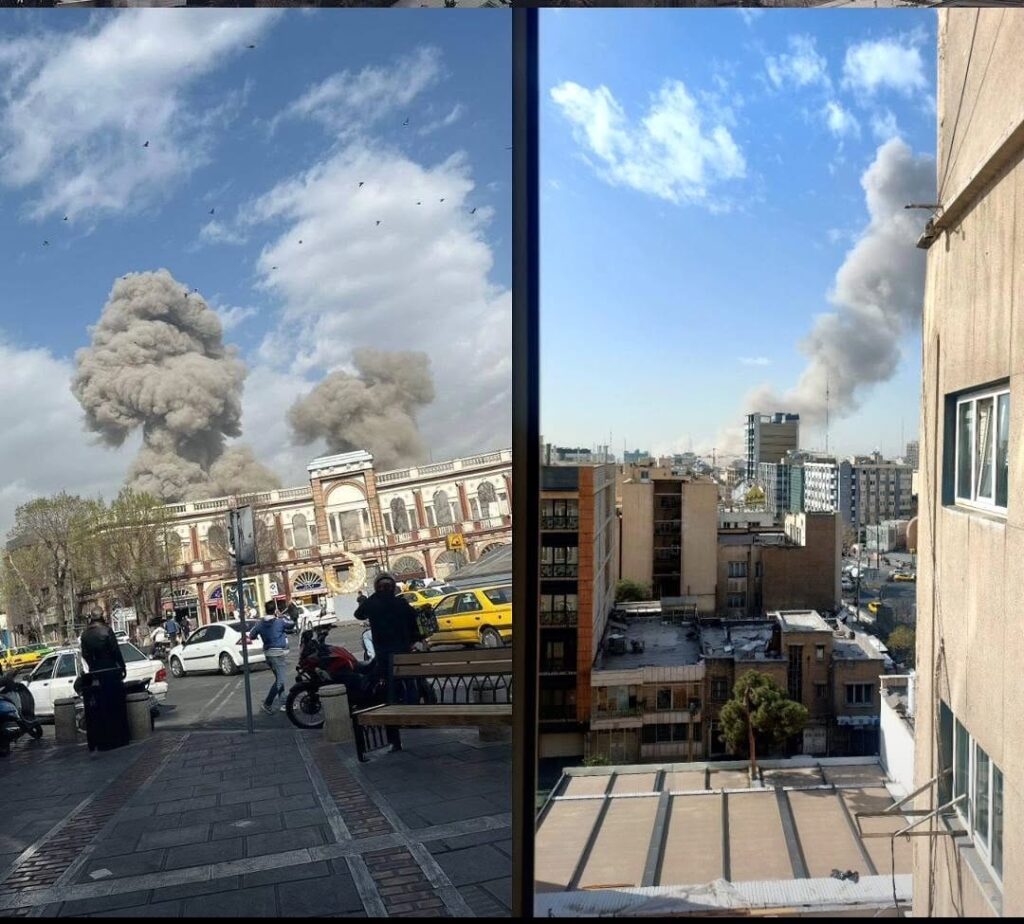
Iran responded within hours. Its military launched ballistic missiles toward American military bases across the Gulf instead of issuing warnings or diplomatic threats.
Radar operators in Qatar, Bahrain, Kuwait, and the UAE watched their screens light up. Air defence systems were activated immediately. Sirens echoed across cities as civilians woke up to a reality they had never faced before.
This moment changed everything. Iran launched a coordinated retaliation against multiple U.S. military bases at once, turning a shadow conflict into an open military confrontation.
Iran struck the backbone of American military power in the Gulf
Iran chose its targets carefully and avoided random strikes. Its missiles are aimed directly at bases that support America’s military dominance in the Middle East.
Iran targeted:
- Al Udeid Air Base in Qatar — the largest U.S. military base in the region
- Al Salem Air Base in Kuwait — a key hub for air combat support
- Al Dhafra Air Base in the UAE — home to advanced fighter jets and surveillance aircraft
- U.S. Navy Fifth Fleet Headquarters in Bahrain — the centre of American naval command in the Gulf
Witnesses in Bahrain saw smoke rising near the naval headquarters. Air defence systems in Qatar and Kuwait intercepted several incoming missiles. Residents in parts of the UAE heard explosions near military zones.
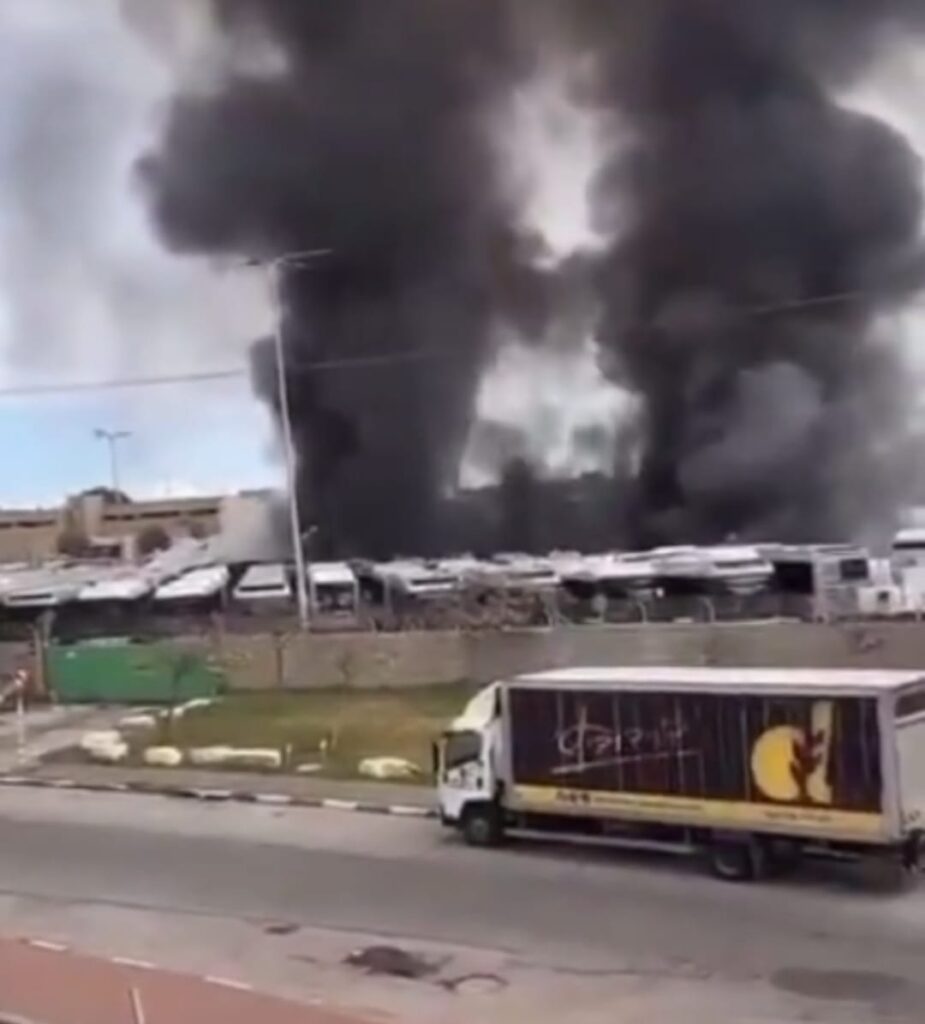
Iran delivered a clear message through these strikes. Its military can reach every major American base in the Gulf when provoked.
Iran demonstrated capability, reach, and strategic planning
Each targeted base plays a crucial role in American military operations. Al Udeid coordinates U.S. air missions across the Middle East. Bahrain hosts the naval fleet that secures Gulf shipping routes. Al Dhafra monitors Iranian airspace and supports aerial surveillance. Al Salem strengthens rapid deployment capability.
Iran showed that it understands this network completely.
By hitting these locations at once, Iran proved its military coordination and operational readiness. This response did more than retaliate — it demonstrated power.
Gulf countries shut down airspace as the threat intensified
Governments across the region reacted quickly to protect civilian lives. Iran, Qatar, the UAE, Kuwait, and Israel closed their airspace within minutes of the missile launches.
Military aircraft replaced civilian traffic. Defence systems took priority. Aviation authorities halted flights to prevent catastrophic accidents.
The Gulf normally serves as one of the busiest air corridors in the world. Thousands of flights connect Europe, Asia, and Africa through this region every day.
Today, that traffic disappeared.
Airlines faced chaos as global travel collapsed across the region
Airlines scrambled to respond to the sudden closures. Pilots diverted aircraft mid-flight. Airlines cancelled departures without warning. Ground crews struggled to manage stranded passengers.
Travel hubs in Dubai, Doha, Abu Dhabi, Kuwait City, and Tel Aviv filled with uncertainty. Families waited for updates. Airlines rushed to create alternative routes.
Global aviation felt the shock immediately. Airlines lost valuable time, fuel, and operational stability.
Iran expanded the conflict by targeting Israeli territory
Iran widened the battlefield beyond Gulf bases. Its military launched missiles toward Israeli territory, including Tel Aviv.
This move raised the stakes dramatically.
Iran showed its willingness to fight on multiple fronts at once. Israel now faces direct military pressure alongside the United States.
Regional tensions increased instantly.
The US and Israel acted to slow Iran’s growing missile strength
American and Israeli leaders had watched Iran’s military expansion closely for months. Intelligence reports warned about growing missile capabilities and expanding strike range.
They believed Iran’s military infrastructure posed a serious long-term threat.
Their forces launched strikes to weaken Iran’s command centres and missile systems before those capabilities expanded further.
Iran’s rapid retaliation proved that its military remains fully operational.
The United States now faces a critical military and strategic decision
American leadership must now decide how to respond. Iran crossed a serious line by attacking multiple U.S. military bases directly.
The United States could launch counter-strikes against Iranian missile sites. Naval forces may move closer to Iranian waters. Additional missile defence systems will likely be deployed across the Gulf.
However, every action carries risk.
A larger regional war could begin if escalation continues. Global stability could suffer. Energy markets, aviation, and international security could all face consequences.
The Middle East has entered a dangerous new phase
This confrontation marks a turning point.
Iran has shown its willingness to strike American military targets directly. The United States and Israel have shown they can hit Tehran itself.
The Gulf no longer stands as a distant strategic zone. It has become an active military theatre.
Missiles have already crossed borders. Airspace remains closed. Military forces remain on alert.
The world now waits for the next move.
Because the decisions made in the coming hours and days will shape the future of the entire region.